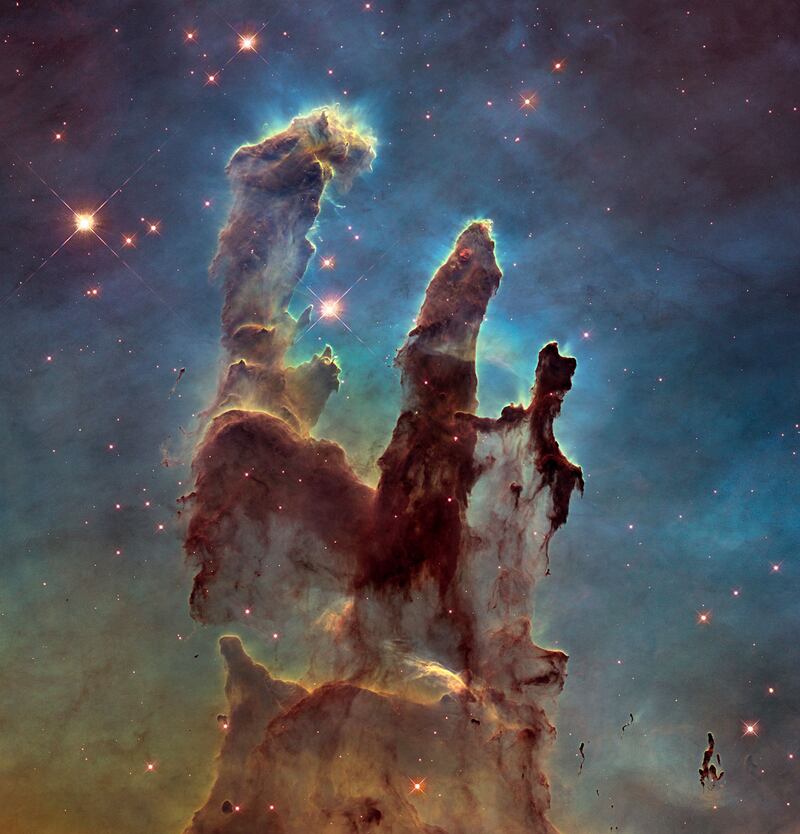
The NASA/ESA Hubble Space Telescope has revisited one of its most iconic and popular images: the Eagle Nebula’s Pillars of Creation. This image shows the pillars as seen in visible light, capturing the multi-coloured glow of gas clouds, wispy tendrils of dark cosmic dust, and the rust-coloured elephants’ trunks of the nebula’s famous pillars. The dust and gas in the pillars is seared by the intense radiation from young stars and eroded by strong winds from massive nearby stars. With these new images comes better contrast and a clearer view for astronomers to study how the structure of the pillars is changing over time. (NASA, ESA/Hubble and the Hubble)
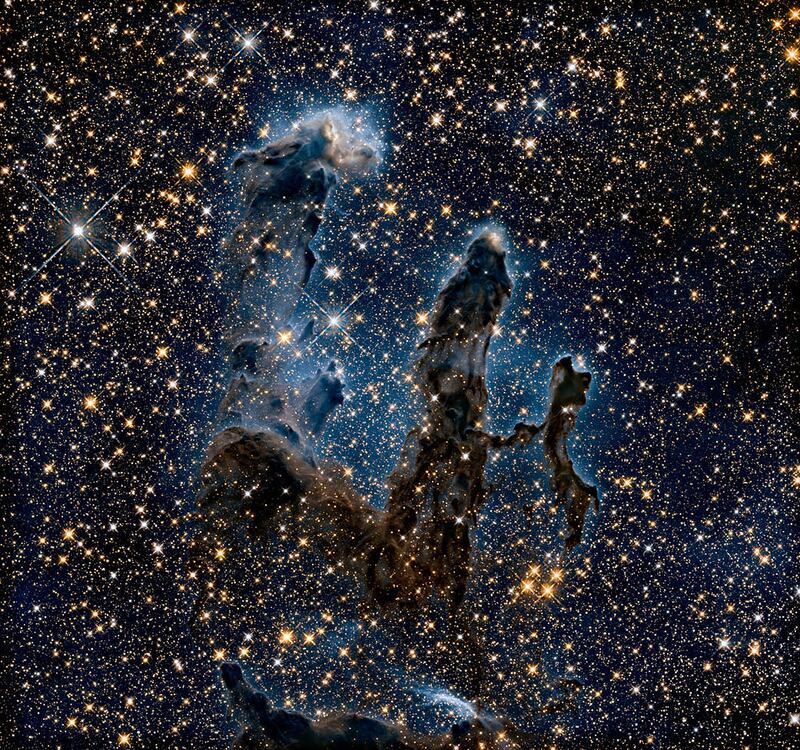
The NASA/ESA Hubble Space Telescope has revisited one of its most iconic and popular images: the Eagle Nebula’s Pillars of Creation. This image shows the pillars as seen in infrared light, allowing it to pierce through obscuring dust and gas and unveil a more unfamiliar — but just as amazing — view of the pillars. In this ethereal view the entire frame is peppered with bright stars and baby stars are revealed being formed within the pillars themselves. The ghostly outlines of the pillars seem much more delicate, and are silhouetted against an eerie blue haze. Hubble also captured the pillars in visible light. (NASA, ESA/Hubble and the Hubbl)
في عام 1995 التقطت وكالة الفضاء الاميركية «ناسا» بمرصد هابل الفضائي صورة ل«أعمدة الخلق» في مايعرف «سديم النسر»، فصارت منذئذ من أشهر صور كوْننا على الإطلاق.
لكن صورة حديثة التقطتها لها الوكالة يكمن فيها كل الروعة والابهار، و تُبين التوهج الإشعاعي للأعمدة بواسطة الأشعة تحت الحمراء، التي اخترقت الغبار والغازات ومنحت الأعمدة هالة زرقاء فاتنة.
تألفت أول صورة للأعمدة من 32 صورة مختلفة أصغر، التُقطت بواسطة الضوء المرئي العادي، فأظهرت الأعمدة في «سديم النسر» وهي تنفث غبارًا كونيًّا وهيدروجينًا باردًا. بحسب مرصد دبي للمستقبل التابع لمءسسة دبي للمستقبل
اكتَشف سديمَ النسر الفلكيُّ السويسري جان فيليب لُوِي دي شيسو في عام 1745، وهو حاضنة نجوم في كوكبة الحية، على بعد 7 آلاف سنة ضوئية من الأرض. يذكر أن بُنيان الأعمدة هائل، فطُول أكبرها اليسار يصل إلى 4-5 سنين ضوئية.