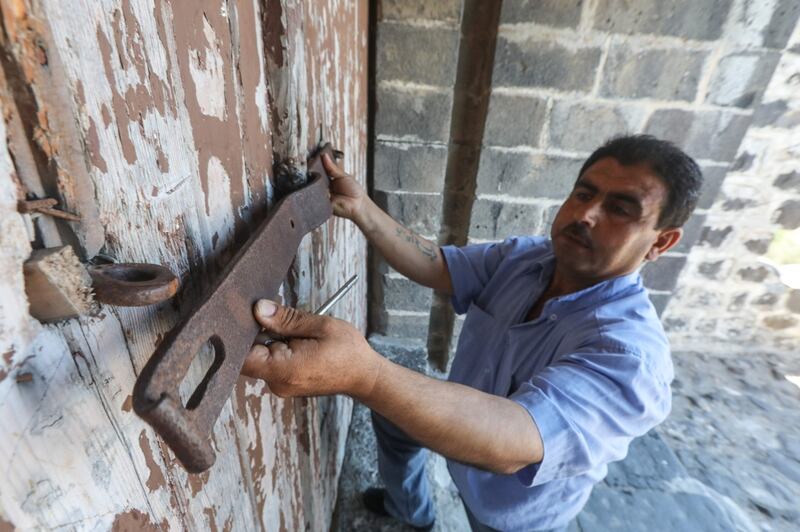
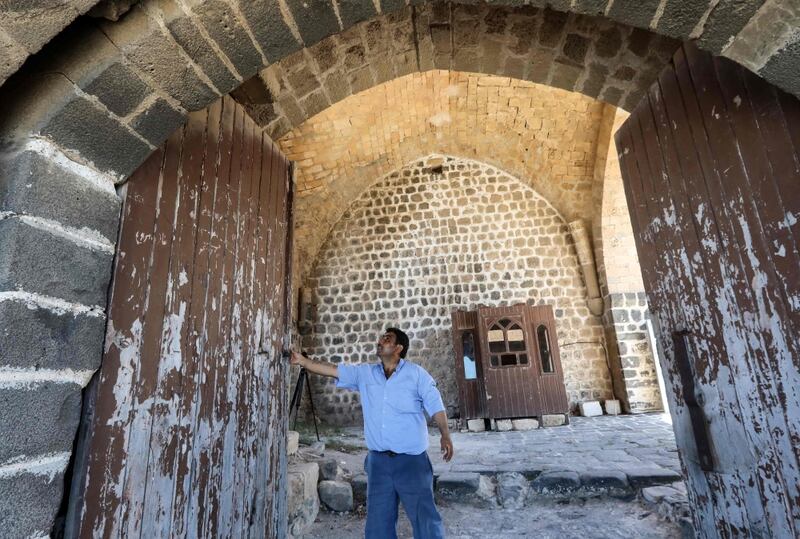
Younes Dayoub, the sole custodian of al-Marqab castle ("watchtower", also known as Margat) -- first fortified by Muslims in 1062 and later served as a stronghold for the Knights Hospitaller crusading order -- unlocks the gate at the premises near the city of Baniyas along the Mediterranean sea coast in Syria's western Tartus province on July 25, 2022. - The Crusader fortress on Syria's Mediterranean coast that welcomed hordes of visitors before the war is now largely the preserve of one person, its custodian of the past 15 years. The thousand-year-old castle has survived the civil war largely unscathed, with no major damage. However, the war has kept nearly all foreign visitors away while domestic tourism has been virtually brought to a halt by a spiralling economic crisis that has plunged most of the population into poverty. (Photo by LOUAI BESHARA / AFP) (LOUAI BESHARA/AFP)
Younes Dayoub, the sole custodian of al-Marqab castle ("watchtower", also known as Margat) -- first fortified by Muslims in 1062 and later served as a stronghold for the Knights Hospitaller crusading order -- opens the gate at the premises near the city of Baniyas along the Mediterranean sea coast in Syria's western Tartus province on July 25, 2022. - The Crusader fortress on Syria's Mediterranean coast that welcomed hordes of visitors before the war is now largely the preserve of one person, its custodian of the past 15 years. The thousand-year-old castle has survived the civil war largely unscathed, with no major damage. However, the war has kept nearly all foreign visitors away while domestic tourism has been virtually brought to a halt by a spiralling economic crisis that has plunged most of the population into poverty. (Photo by LOUAI BESHARA / AFP) (LOUAI BESHARA/AFP)
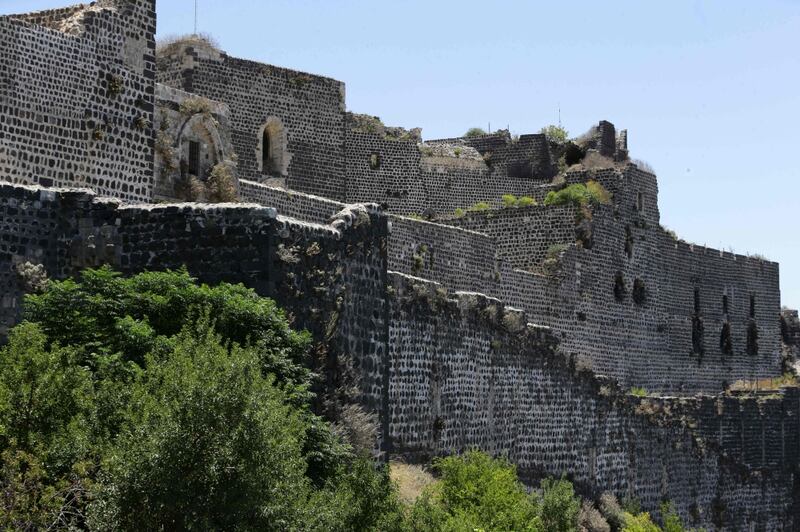
This picture taken on July 25, 2022 shows a view of al-Marqab castle ("watchtower", also known as Margat) -- first fortified by Muslims in 1062 and later served as a stronghold for the Knights Hospitaller crusading order -- near the city of Baniyas along the Mediterranean sea coast in Syria's western Tartus province. - The Crusader fortress on Syria's Mediterranean coast that welcomed hordes of visitors before the war is now largely the preserve of one person, its custodian of the past 15 years. The thousand-year-old castle has survived the civil war largely unscathed, with no major damage. However, the war has kept nearly all foreign visitors away while domestic tourism has been virtually brought to a halt by a spiralling economic crisis that has plunged most of the population into poverty. (Photo by LOUAI BESHARA / AFP) (LOUAI BESHARA/AFP)
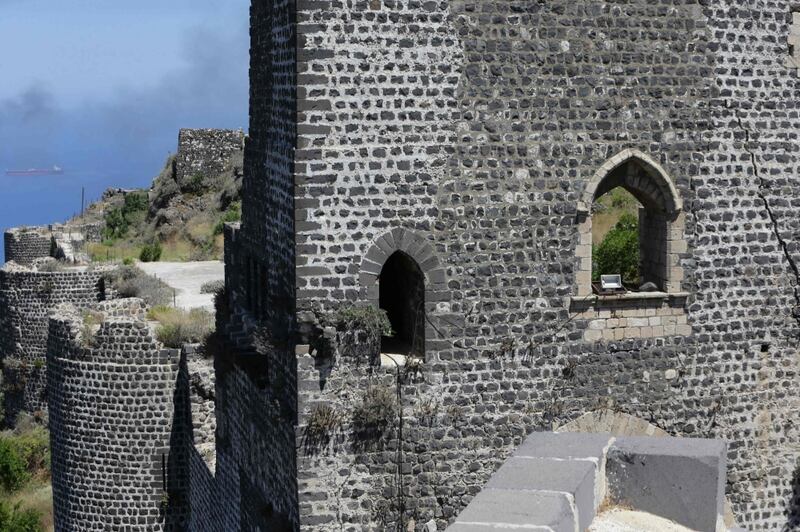
This picture taken on July 25, 2022 shows a view of the walls of al-Marqab castle ("watchtower", also known as Margat) -- first fortified by Muslims in 1062 and later served as a stronghold for the Knights Hospitaller crusading order -- near the city of Baniyas along the Mediterranean sea coast in Syria's western Tartus province. - The Crusader fortress on Syria's Mediterranean coast that welcomed hordes of visitors before the war is now largely the preserve of one person, its custodian of the past 15 years. The thousand-year-old castle has survived the civil war largely unscathed, with no major damage. However, the war has kept nearly all foreign visitors away while domestic tourism has been virtually brought to a halt by a spiralling economic crisis that has plunged most of the population into poverty. (Photo by LOUAI BESHARA / AFP) (LOUAI BESHARA/AFP)
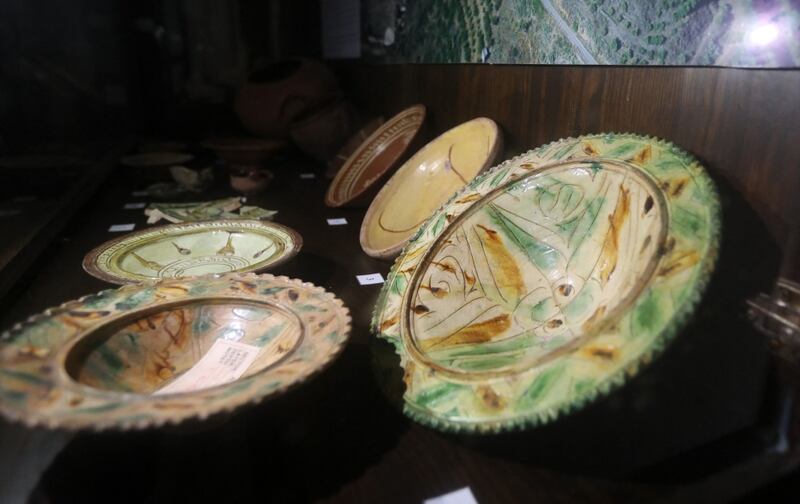
This picture taken on July 25, 2022 shows a view of the curated pottery collection inside al-Marqab castle ("watchtower", also known as Margat) -- first fortified by Muslims in 1062 and later served as a stronghold for the Knights Hospitaller crusading order -- near the city of Baniyas along the Mediterranean sea coast in Syria's western Tartus province. - The Crusader fortress on Syria's Mediterranean coast that welcomed hordes of visitors before the war is now largely the preserve of one person, its custodian of the past 15 years. The thousand-year-old castle has survived the civil war largely unscathed, with no major damage. However, the war has kept nearly all foreign visitors away while domestic tourism has been virtually brought to a halt by a spiralling economic crisis that has plunged most of the population into poverty. (Photo by LOUAI BESHARA / AFP) (LOUAI BESHARA/AFP)
منذ سنوات، يواظب يونس ديّوب على فتح باب قلعة المرقب يومياً، أملاً باستقبال سوّاح أو زوار لطالما اكتظ بهم الموقع الأثري المطل على الساحل السوري.
صباح كل يوم، يقصد ديوب (49 عاماً) القلعة المشرفة على شاطئ مدينة بانياس، حاملاً مفتاحاً حديدياً كبيراً لفتح بابها الرئيسي. ويجلس داخل غرفة خشبية اعتاد استخدامها لقطع تذاكر الزوار، الذين بات توافدهم شبه معدوم منذ اندلاع النزاع وعلى وقع الأزمة الاقتصادية الحادة التي تعيشها البلاد.
ويقول الحارس الذي تولى وظيفته قبل 15 عاماً لوكالة فرانس برس «رغم أن أبواب القلعة لا تزال مفتوحة، تمرّ أيام وأسابيع من دون أن أقطع أي تذكرة». ويُضيف «هذا هو الحال منذ بدء الحرب» التي عصفت بسوريا منذ عام 2011.
وعوض أن يقطع التذاكر، يمضي وقته في احتساء الشاي الساخن وتأمل الشاطئ واستعادة ذكريات ما قبل زمن الحرب، حين كانت القلعة المرصّعة بالحجارة البيضاء والسوداء تكتظ بقاصديها من سوريا ومن خارجها. ويقلب بين الحين والآخر صوراً التقطها للسياح في زمن مضى.
حين يشعر بالملل، يترك ديوب مقعده ويتجول في أنحاء القلعة ذات الجدران المرتفعة والخالية من أي من مظاهر الحياة.
ويُضيف أثناء سيره بخطوات بطيئة «حرب طيلة سنوات ثم وباء (كوفيد-19) فأزمة المحروقات. كل ذلك أوقف توافد السياح، وتراجعت الزيارات الداخلية بشكل كبير».
وتتربّع القلعة على تلة تبعد خمسة كيلومترات من مدينة بانياس التابعة لمحافظة طرطوس، وقد بُنيت العام 1062 على مرتفع يُحيط بها خندق ضخم فوقه جسر حجري متين. وتضم آثار كنيسة ومتحفا داخلها.
ويقول ديّوب بعدما شرع في لملمة أغراضه ليغلق باب القلعة خلفه مع انتهاء دوامه «أشعر بالوحدة هنا، وليس لي من أصدقاء إلا هذه الجدران العالية الصامتة».
ويُضيف «قطعتُ عهداً على نفسي أن أدخل الزوّار مجاناً وعلى نفقتي الخاصة لمدة أسبوع عندما تعود الحركة إلى سابق عهدها (..) أتمنى أن يأتي ذلك اليوم قريباً».